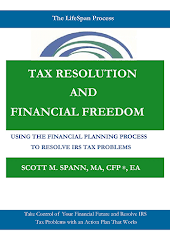
Tax season has arrived and many Americans are still struggling financially. The recent economic crisis is still having a dire impact on the ability for families to manage their day to day finances. It is no surprise that an increasing number of people are having trouble meeting their income tax obligations. So what can you do if you find yourself unable to pay your income taxes?
Do not panic or procrastinate. IRS tax notices and balances due on recently filed tax returns can bring out a lot of negative emotions. Once you recognize that you owe taxes to the IRS take action immediately. Just because you cannot afford to pay the taxes due immediately does not mean there are no options. Many people make a tax problem worse by procrastinating or avoiding it altogether.
Create a financial plan. The creation of a financial plan is the single most important step to take when you owe taxes to the IRS. Why? A financial plan provides the guidance needed to help you address the tax situation and other important financial life goals. Unfortunately, most people tend to avoid this step altogether. When working with clients experiencing tax debt problems I refer to their financial plan as a tax resolution plan.
In order to resolve tax problems the most cost-effective way possible you need a tax resolution plan. The ultimate goal should be to get out of debt quickly so you can focus on other more important aspects of your financial life. Goals such as saving for your child's education, retirement, paying off debt, buying a house, etc. are difficult to achieve if you owe the IRS. A financial plan will also help you with future income tax planning. Some areas of focus could include maximizing all potential tax deductions, reducing future taxes, tax efficient investing, and planning ahead for future tax related events.
File your taxes. Go ahead and file a tax return even if you cannot pay the taxes owed in full. This will eliminate the failure to file or late filing penalties. In many cases the IRS will not work with you until you have filed all past due tax returns.
Stay current with future tax obligations. While you are working to resolve your tax debt problems you must stay current with your tax obligations. For self-employed individuals this requires you to continue (or begin) making estimated tax payments. If you are a wage earner you need to make sure that you are having sufficient taxes withheld from your pay.
Establish a plan. By following the financial planning process you should obtain a good understanding of where you stand financially. Complete a net worth analysis that explores everything you own and everything you owe to others. You will also need to complete a cash flow analysis that looks at your income and expenses. These two factors are critical when exploring all of your available options to resolve the tax debt.
Explore all available tax resolution options. If a taxpayer cannot pay taxes owed in full, the most common tax resolution alternative is to establish a payment plan or Installment Agreement. Other alternatives include Partial Payment Installment Agreements, Currently Not Collectible Status, bankruptcy, or requesting an Offer in Compromise. If you are considering an option other than setting up a payment plan you should consult an Enrolled Agent, CPA, or tax attorney.
Follow the plan and take action. Tax debt resolution requires discipline and planning. If you follow basic elements of the financial planning process you will be able to get out of debt sooner and move on with your life. Tax problems are stressful. However, effective solutions do exist for those that take action and follow a tax and financial plan.
For more information on the LifeSpan Process of Tax Resolution and Financial Freedom contact LifeSpan Financial Planning at 843-469-3505.
Showing posts with label tax problems. Show all posts
Showing posts with label tax problems. Show all posts
Wednesday, February 3, 2010


Thursday, April 23, 2009
Fighting Procrastination
Are procrastinating behaviors holding you back as you attempt to deal with tax and financial matters? You have probably heard the saying, “Why do today what you can put off tomorrow?”. It seems that a significant number of people with tax or financial problems experience a tendency to put off or get overwhelmed by their financial obligations.
Procrastination is defined as putting off things that you should be doing now. Most people procrastinate at some point in their lifetimes. Approximately 20% of people in this country are classified as “chronic procrastinators”. Typical distractions that delay tax and financial planning include family commitments, work, email, cell phones, internet, iPods, and 400 plus channels of digital television with video on demand. Not surprisingly, procrastination is a common characteristic of many tax and financial planning clients.
“To do” lists provide good reminders of what needs to be done. However, a “to do” list is also a good way to delay things actually getting done in a timely manner. Have you ever had good intentions in the past in relation to financial planning tasks? Some common tax and financial intentions are listed in the statements below:
• “I need to file my taxes on time this year.”
• “I really need to set up a savings fund just in case an emergency occurs.”
• “We should pay off our credit cards.”
• “Let’s get our paperwork to our accountant.”
• “I need to get my financial planning forms to my planner.”
Unfortunately, the good intentions listed above lack direction. A better alternative as you follow the steps of the tax resolution process is to develop what I refer to as “implementation intentions” or “planning intentions”. In the tax resolution world, planning intentions decide how, when, and where you are going to accomplish the steps of the tax and financial process. They increase the likelihood you will follow through on the important steps needed to improve your financial well-being.
If you are undergoing the tax resolution process to deal with tax debt you should be sure to define the specifics (how, when, where, etc.) of your planning behaviors. Put your planning actions in writing and hold yourself accountable. Never miss a deadline.
For more information on the LifeSpan Process of Tax Resolution call Scott Spann toll-free at 877-TAX-9110.
Tuesday, April 21, 2009
Common Reasons for Tax Problems
It is important to understand the reasons for the tax problems and their underlying causes. If you have a tax issue, do not forget the ultimate goals that you have for the Tax Resolution and Financial Freedom process. You should be trying to deal with your tax problems and replacing the problematic financial behaviors with positive ones. This process requires accountability, so be honest with yourself. Now is not the time to dwell on past mistakes. You need to use the knowledge of past mistakes or uncontrollable circumstances as a motivator to guide you along the process of change.
Here is a review of some of the most common events or circumstances that may lead to tax trouble:
· Self-employment- Not understanding the self employment tax or simply neglecting to pay estimated taxes for self-employment income
· Tax protestor
· Failure to pay employment taxes or payroll taxes
· Taxation of Retirement Distributions
· Capital gains reporting related to the sale of stocks, bonds, mutual funds, etc.
· Changes related to an audit
· Insufficient taxes withheld from pay (W-4)
· Loss of job or income reduction
· Cash flow problems related to living beyond your means
· Poor financial management
· Not having enough money set aside for emergencies
· Divorce or other personal problems
· Business failure
· Health problems, medical emergencies; physical and mental problems
A Growing Problem
Tax debt is a financial problem that will only create more trouble if not dealt with quickly and appropriately. More and more people are facing tax liabilities that will have a long-lasting effect on the financial well being and quality of life for people choosing to ignore their tax issues. Tax liabilities do more than create financial stress. Tax problems can affect your emotional and physical well-being. Tax debt also tears apart relationships and marriages. Financial differences are frequently cited as the number one reason that couples get divorced.
If you don't deal with your IRS tax problems in a timely manner, any of the following could occur:
· The IRS can levy (seize) your bank account and take your money out of the bank.
· The IRS can file a notice of levy with your employer to levy your wages, salary, and other income. They can take a substantial amount of your paycheck. This also tells your employer that you have a problem with the IRS. The IRS also enforces collection against your 401(k) and other retirement accounts.
· Penalties and interest will continue to accrue.
· The IRS can levy (seize) your assets and sell them at public auction to satisfy your tax liability.
· With court approval, the IRS can levy (seize) your residence and sell it at public auction to satisfy your tax liability.
· The IRS can issue a summons to third parties such as your bank, credit union, employer, and others to determine assets or property owned by you.
· The IRS can issue a summons to you requiring you to appear, testify or produce books, papers, records, or other data.
· The IRS can file a Notice of Federal Tax Lien, which is public notice of a lien in favor of the United States on all property and rights to property belonging to you.
· Tax related stress may also lead to physical and psychological problems. Financial problems are often cited as the number one reason couples seek a divorce.
Tax problems come in all shapes and sizes. It is important to have a solid understanding of the reasons for tax debt. It is also essential to understand the potential consequences of tax debt. The solution to tax debt is to establish a tax resolution plan.
Scott M. Spann
1-877-TAX-9110
LifeSpan Financial Planning, LLC
Monday, April 13, 2009
IRS Tax Debt Resolution: The Financial Planning Approach
Trying to find the best way to resolve tax problems can be a difficult process. Writing about the best practices to help taxpayers is also a unique challenge. When I started the project of writing a book on tax resolution planning I had a simple goal in mind. I wanted to present an overview of how to use the tax and financial process to deal with tax problems. However, I quickly noticed that very few tax and financial planning professionals actually provide comprehensive financial counseling and planning for a group of people that needs help the most. While exploring this specialized area of tax and financial planning, I have learned a great deal about my own approach to the tax resolution process.
My conclusion is quite simple. The ideal solution to tax and financial problems includes a dual focus on tax resolution and financial planning. Rarely are both disciplines combined in an effective manner. Resolving IRS tax liabilities by using fundamental principles of the financial planning process is the most effective way to deal with tax problems. The use of these same principles is also needed to prevent future IRS tax problems.
One thing that I realized during my research and practical application of this approach is that comprehensive financial planning does work for people with federal and state tax liabilities. However, tax resolution planning is a unique process that needs to be structured in a way that increases the likelihood that someone with significant tax issues related to financial management problems will actually succeed in taking control of their situation.
The LifeSpan Process of Tax Resolution and Financial Freedom combines the fundamental principles of tax and financial planning in a holistic manner that focuses on the psychological and behavioral aspects of managing money and taxes. Simply put, most other approaches to tax problems only deal with the elimination of tax debt rather than the elimination of poor financial decision making. In order to achieve freedom from tax debt you must start with a plan that emphasizes smart financial decisions. When the tax resolution process is performed the right way it always places the focus on “big picture” issues.
Give LifeSpan Financial Planning, LLC a call at 1-877-TAX-9110 if you have any questions regarding tax resolution planning.
Scott M. Spann, CFP, EA
scott@lifespanplanning.com
Subscribe to:
Posts (Atom)



 Posts